Monday, 25 February 2019

Deal Alert: Grab a Kindle Paperwhite for $55

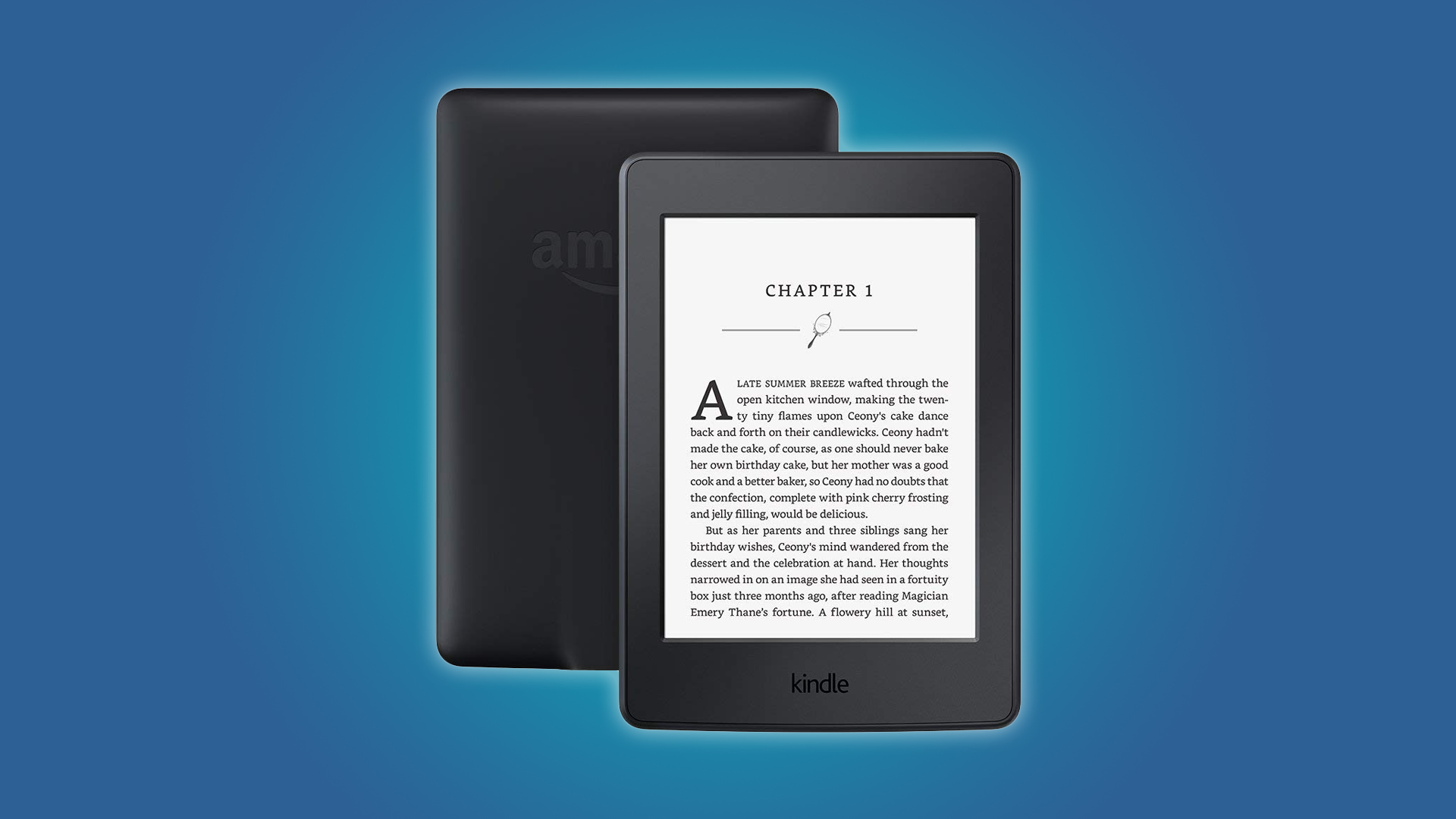
There are a lot of tablets on the market, but the Kindle Paperwhite is still the king of e-readers. Luckily, Paperwhites are pretty inexpensive, and Woot has refurbished units at a discount.

Right now, you can buy a refurbished 7th generation Kindle Paperwhite from Woot for just $55. That’s a $45 discount. These Paperwhites have a 6″ display, and 4 GB of internal storage (which is plenty of storage for e-books). They also have special offers on the lock screen, and they’re Wi-Fi only.

Now, this is actually the previous generation of Kindle Paperwhites — that’s part of why they’re so inexpensive. But don’t worry, you’re only missing out on a waterproof display and some extra internal storage.

These are refurbished units, but Kindle Paperwhites are known to be pretty sturdy. Plus, Woot offers a 90-day warranty on products, so there isn’t much to worry about. Just don’t sleep on this deal, it’s going to disappear by the end of the day.


Source: How-To Geek

How to Find the Percentage of Difference Between Values in Excel

You can use Excel to calculate the percentage of change between two values quickly. In our simple example, we show you what you need to know to be able to calculate things like how much the price of gas changed overnight or the percentage of a stock price’s rise or fall.

How Percentage of Change Works

The percentage of change between an original and a new value is defined as the difference between the original value and the new value, divided by the original value.

(new_value - original_value)/(original_value)

For example, if the price of a gallon of gasoline was $2.999 yesterday on your drive home and it rose to $3.199 this morning when you filled your tank, you could calculate the percentage of change by plugging those values into the formula.

($3.199 - $2.999)/($2.999) =  0.067 = 6.7%

Let’s Look at an Example

For our simple example, we will look at a list of hypothetical prices and determine the percentage of change between an original price and a new price.

Here is our sample data containing three columns: “Original Price,” “New Price,” and “Percentage of Change.”  We have formatted the first two columns as dollar amounts.

Example Data

Start by selecting the first cell in the “Percentage of Change” column.

Select Cell G3

Read the remaining 15 paragraphs


Source: How-To Geek

SanDisk and Micron Announce 1 TB MicroSD Cards for Ridiculous Amounts of Dollars

If you own a GoPro or a Nintendo Switch, then there’s no such thing as a MicroSD card too large. SanDisk and Micron are both stepping up to the plate with humungous 1 TB microSD cards.

Mobile World Congress is in full swing and taking a break from phones that fold, Sandisk and Micron have both stepped forward to announce microSD cards. But these aren’t just any old microSD cards; they’re 1 TB microSD cards. That’s handy because some systems like the Nintendo Switch need expanded storage. Zelda: Breath of the Wild started at 13 GBs before DLC, which means it used up 40% of the Switch’s internal storage.

Games are only growing more massive, and camera needs are growing too. Every update to an action camera or smartphone leads to ever-expanding picture sizes. More and more smartphones support raw storage for photos, which take up more space than jpegs but provides more information to work with for editing.

1 TB microSD cards should take of the problem, but it will come at a cost. Micron hasn’t announced pricing yet, but Sandisk’s card will cost an eye-watering $450, the same price as a Switch, Mario Oddysey, and Zelda: Breath of the Wild, plus one year of Nintendo Switch Online.

Which company you go with also depends on your preferences for read or write speeds. SanDisk is calling its card the “World’s fastest” and boats a read speed of 160 MB/s. Sandisk claims at that speed, you could theoretically “transfer 1000 high-resolution photos and 30 minutes of 4K video (24GB) in less than 3 minutes.”

Micron may not have the edge in read speeds, but it does bost a faster write speed, albeit just barely. Sandisk write speeds top out at 90 MB/S, while Micros boats 95 MB/S. It may be worth waiting to see Micron’s pricing as well. If it’s lower than $450, that could be a selling point worth considering.

If you can settle for a step-down, SanDisk also announced a 512 GB microSD card, for a more palatable $200. You’ll get the same read and write speeds, half the storage at less than half the cost.

Sandisk, Micron via 9to5Toys


Source: How-To Geek
How to Save Screenshots of the Chrome OS Login Screen

Chrome OS Login Screen

There may not be a whole lot of reasons to take screenshots of the login screen on your Chromebook. If you ever need to, however, it’s a needlessly lengthy process. Here’s how to do it.

First off, you need to know how to take a screenshot, which is surprisingly easy: press the Ctrl and []]] keys at the same time. (The “[]]]” key is located above the 6 key on your keyboard’s number row.) Boom, screenshot taken. This part works anywhere—even on the login screen.

The problem comes when you try to retrieve said screenshot because you won’t find it in the default location on your account. Since you’re not logged in when you take the screenshot, the system can’t associate it with an account on the Chromebook.

So where does it store it? In a temporary directory. The screenshot(s) will stay here even after you log in—you just need to know how to copy it over to your account, which will require some time in the Chrome OS shell.

That may sound intimidating, but I promise it’s pretty simple—you just have to type a few commands, and you’ll be rockin’ and rollin’.

So, go ahead and fire up Crosh by pressing Ctrl+Alt+T. Here, type shell and hit enter.

Chrome OS Shell

In the shell, navigate to the tmp directory by typing the following: cd /tmp/

Read the remaining 12 paragraphs


Source: How-To Geek

The Best VPN for Blocked Content and Sites

What Is Post-Production or Post-Processing in Photography and Videography?

You’ve probably heard the terms “post-production,” “post-processing,” or simply “post” about movies but they also apply—and are equally important—to photography. Let’s break down what they mean.

The three terms—post-production, post-processing, and post—are, short of Hollywood movies, basically interchangeable. The “production” is what happens on set or location; it’s what you’re doing when you’re wandering around with your camera in your hand shooting photos or video. “Post-production,” then, is everything that happens after you’ve finished shooting, “post-processing” is all the processing that’s done after you’ve finished shooting, and “post” is an abbreviation for the two.

What Is Post?

So, we’ve established above that post is everything that happens after a shoot, but what does that entail? In most cases, it involves some (or all) of the following:

How much post-processing is involved and how long it takes utterly depends on the project. A professionally shot short film will spend months in post-production with each step being done multiple times, on the other hand, I can process a few dozen photos in an hour—as long as I’m not doing any major retouching.

Here’s an example of an image I’ve taken through the steps above in about 20 minutes. Here’s what it looked like straight out of the camera (I also had another few similar photos that I rejected in post).

And here’s what it looks like after.

Read the remaining 13 paragraphs


Source: How-To Geek

How to Transfer a Windows 10 License to Another Computer

Two computers side by side, one partially disassembled

If you’ve ever built a computer and purchased a Windows license, you probably don’t want to buy another license for your next one. With the slmgr command, it’s possible to deactivate your old PC and then activate a new one.

Deactivate an Old PC Instead of Buying a New License

Windows licenses are expensive. At $100 to $200, an official product key from Microsoft costs about the same as a 1 TB solid-state drive, 16 GB of RAM, or a motherboard. And it’s not a good idea to buy cheap keys from sketchy websites. So paying for another license when you want to decommission an old computer in favor of a new one isn’t a great option. The good news is, it’s possible to deactivate a PC you no longer intend to use, then transfer that license to a new computer.

The slmgr command makes this reasonably straightforward, but you’ll want to keep in mind a few limitations. This won’t work for OEM keys, which are keys that came with a computer you bought in a store. Manufacturers embed these keys to the hardware on which they originated, and transferring them to new devices won’t work. And while  slmgr can deactivate any retail key (a key you purchased separately), it will only activate a key that matches the installed operating system.

Windows 7 and 8 keys will still activate Windows 10, but only through the standard activation process and not through slmgr . If you enter a “Pro” key on a “Home” install, that too will fail with  slmgr . To keep things as simple as possible, transfer a Windows 10 Home key to a Windows 10 Home device, and a Windows 10 Pro key to a Windows 10 Pro device. Otherwise, you’ll have to take some extra steps.

How to Deactivate Your Old PC

Before you get started, make sure you have your Windows Key saved somewhere. If you have a product box or digital receipt, grab it from there. Otherwise, there are some ways you can recover the product key from your old PC, including using Nirsoft’s Produkey.

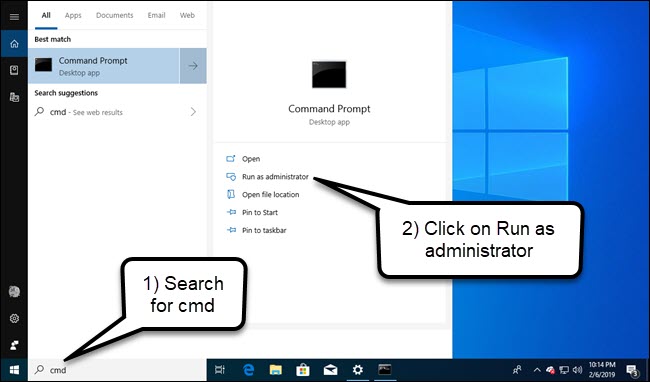
To deactivate your old PC, you’ll need to open an elevated Command Prompt. Having an administrator account isn’t enough. You will need to click the start button and type “cmd” (without quotes) into the search box. Then click on the “Run as administrator” option to the right.

Windows search for command prompt, with Run as administrator option highlighted

In the command prompt that appears, run the following command and then restart your computer:

slmgr.vbs /upk

Read the remaining 18 paragraphs


Source: How-To Geek